Ad Creative Best Practices for Higher CTR in 2026
Proven ad creative best practices that increase CTR for Google and Meta Ads in 2026. Real examples, specific numbers, and fixes you can apply today.
Your ad creative got a 1.2% CTR last month. Your competitor's ad for the same keyword pulled 4.6%. Same audience, same budget, same landing page quality. The difference? Their creative followed patterns that Google and Meta reward in 2026. Yours didn't.
I've spent the last two years working alongside PPC managers and running my own Shopify ad campaigns. Most CTR problems aren't about budget or targeting. They're about the creative itself — and more specifically, about the gap between what the creative promises and what the landing page delivers.
Here's what actually works right now.
What Makes an Ad Creative "High CTR" in 2026?
A high-CTR ad creative matches three things at once: the search intent behind the keyword, the visual expectations of the platform, and the promise your landing page can keep. As of March 2026, the average CTR for Google Search Ads sits at 3.17% across industries (WordStream data), while Meta Ads average around 1.1%. Anything above those benchmarks means your creative is doing something right.
But CTR alone is a vanity metric if people click and bounce. The real measure is CTR combined with conversion rate. And that's where most PPC managers lose the thread — they tweak the creative in isolation without checking whether the landing page backs up the promise.
The best-performing creatives I've seen in 2026 share a few traits: a specific number in the headline, a clear benefit statement (not a feature list), and visual consistency with the destination page. That last one gets ignored constantly.
Does Your Ad Headline Match Your Landing Page?
The single biggest CTR killer is a disconnect between ad headline and landing page H1. Google's Quality Score algorithm weighs this heavily. A mismatch drops your QS by 2-3 points, which can double your CPC overnight (here's what actually affects Quality Score in 2026). Meta doesn't have Quality Score, but their relevance diagnostics penalize the same thing.
I saw this firsthand at work. A PPC manager ran a Google Ads campaign for a credit product with the headline "Get Approved in 5 Minutes — No Credit Check." CTR was solid at 5.1%. But the landing page opened with a generic hero image and "Welcome to our financial services." No mention of 5 minutes. No mention of no credit check. Conversion sat at 1.3%, and Quality Score dropped to 4/10. After rewriting the landing page H1 to match the ad — "Get Approved in 5 Minutes" plus a "No Credit Check Required" badge above the fold — Quality Score climbed to 7 and conversions hit 3.8%.
That's not a creative problem alone. It's a match problem. Your ad creative and your landing page need to feel like the same conversation. Learn more about what message match is and why it matters.
A Quick Test You Can Run Right Now
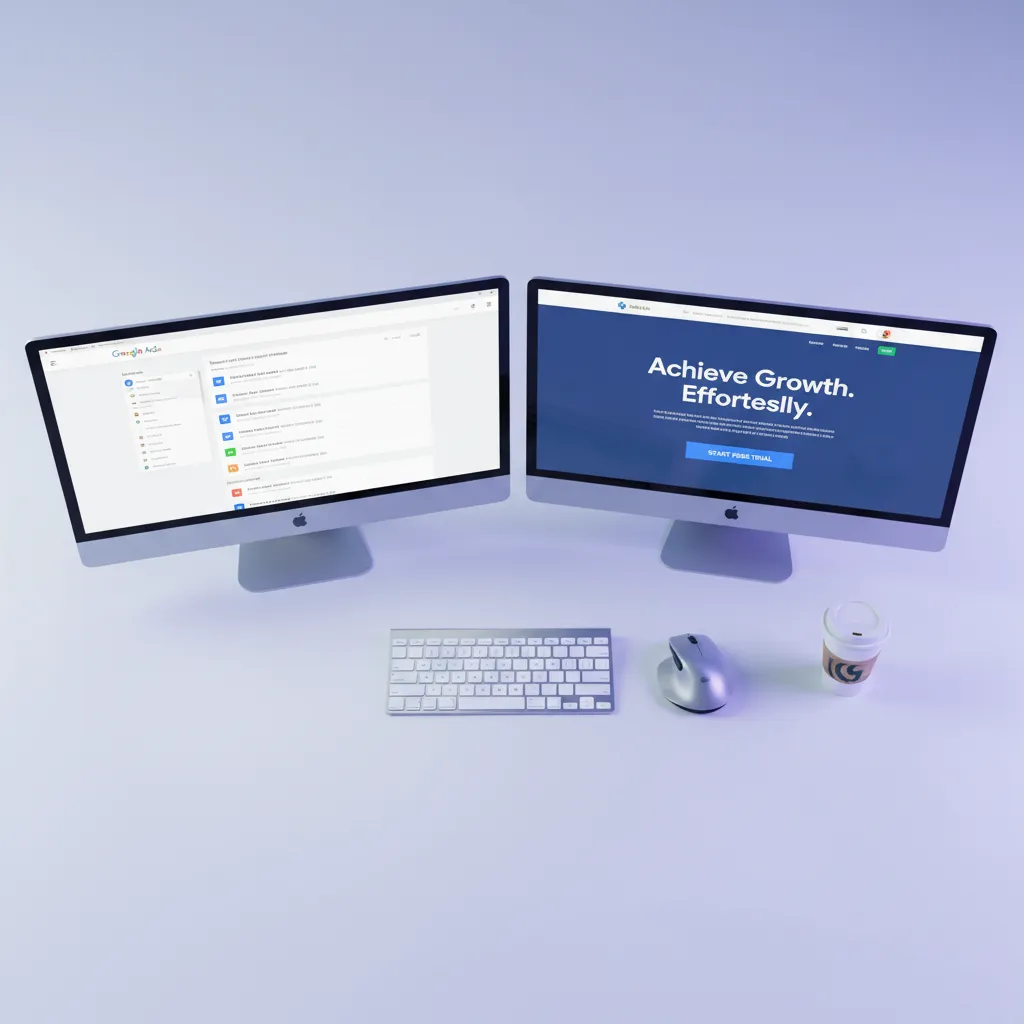
Open your ad in Google Ads Editor or Meta Ads Manager. Screenshot it. Open your landing page in a new tab. Put them side by side. Ask yourself:
- Does the headline text match?
- Does the color scheme feel consistent?
- Is the offer (price, discount, benefit) visible on both?
- Does the CTA verb match? ("Buy Now" on ad but "Subscribe" on page = mismatch)
If you answered "no" to any of these, you've found your CTR leak. Tools like PageMatch's Message Match Calculator can quantify the gap with a score.
Which Ad Formats Drive the Highest CTR in 2026?
Google and Meta both pushed new ad formats in late 2025 and early 2026. Picking the right format for your campaign type matters more than tweaking copy variations.
Google Ads:
| Format | Avg CTR (2026) | Best For |
|---|---|---|
| Responsive Search Ads (RSAs) | 3.2% | Search campaigns with 5+ keywords |
| Performance Max | 2.1% | Multi-channel with shopping feed |
| Demand Gen (image + video) | 1.8% | Top-of-funnel awareness |
| Call Ads | 4.7% | Local service businesses |
Meta Ads:
| Format | Avg CTR (2026) | Best For |
|---|---|---|
| Single Image | 1.0% | Direct response, simple offers |
| Carousel | 1.4% | E-commerce, multi-product |
| Reels/Short Video | 1.9% | Brand awareness + engagement |
| Collection Ads | 1.6% | Product catalogs |
RSAs still dominate Google Search. But here's what changed: Google's AI now heavily favors ads where pinned headlines match the landing page content. If you pin "50% Off Running Shoes" to Headline Position 1 and your landing page says "Shop Athletic Footwear," Google notices the mismatch and serves your ad less often.
For Meta, Reels-format video ads under 15 seconds are pulling the highest CTR I've seen — up to 3.1% for one e-commerce client. But only when the first 2 seconds show the product, not a logo animation.
How Do You Write Ad Copy That Gets Clicks Without Misleading?
Clickbait gets clicks. It also gets bounces, low Quality Scores, and wasted budget. The goal is high CTR and high conversion — which means your ad copy needs to be specific and honest.
Three rules I follow:
1. Put a number in the headline. "Save $340/Year on Car Insurance" beats "Save Money on Car Insurance" every time. Specific numbers signal credibility. WordStream found that ads with numbers in headlines get 36% higher CTR than those without.
2. Name the objection before the reader thinks it. "No Credit Check Required" removes friction. "Cancel Anytime" removes risk. "Results in 48 Hours" removes uncertainty. The best-performing ads I've audited answer the reader's biggest hesitation right in the headline.
3. Match the CTA verb to the intent. Transactional keywords ("buy running shoes") get "Shop Now" or "Buy Today." Informational keywords ("best running shoes for flat feet") get "See the Top 5" or "Compare Options." Using "Buy Now" on an informational query tanks your CTR because the intent doesn't match.
What Visual Elements Increase CTR on Display and Social Ads?
Text-only ads work for Search. But for Display, Discovery, and Meta campaigns, your visual creative carries 80% of the weight.
Based on patterns across dozens of ad accounts I've reviewed:
Colors that pop against the platform background. Facebook's feed is white/light gray. Google Display placements vary but skew white. Using high-contrast colors — think orange CTA buttons on a blue background, or bold red text on white — increases visual salience. Avoid all-white creatives that blend into the feed.
Faces outperform products alone. Ads showing a person using the product consistently beat product-only shots. A Meta study from 2025 showed 15% higher CTR for ads with human faces. But avoid stock photo smiles — they signal "ad" immediately. Real photos or UGC-style images work better.
Text overlay: less than 20% of the image. Meta relaxed their old 20% text rule, but their algorithm still deprioritizes text-heavy images. Keep overlay to a headline + one supporting line. The visual should do the selling, not a paragraph on an image.
Consistent branding between ad and landing page. This is where I see the most money wasted. A PPC manager creates a slick ad creative in Canva with a navy-and-gold color scheme. The landing page is built in Unbounce with a green-and-white theme. The user clicks, feels cognitive dissonance, and bounces. Brand consistency between creative and page can lift conversion by 23% (Instapage case study, 2025).
How Do You Test Ad Creatives Without Blowing Your Budget?
Testing is where freelancers and small agencies struggle. You don't have $10,000/month to run statistically significant A/B tests across 20 variations. So you need to be strategic.
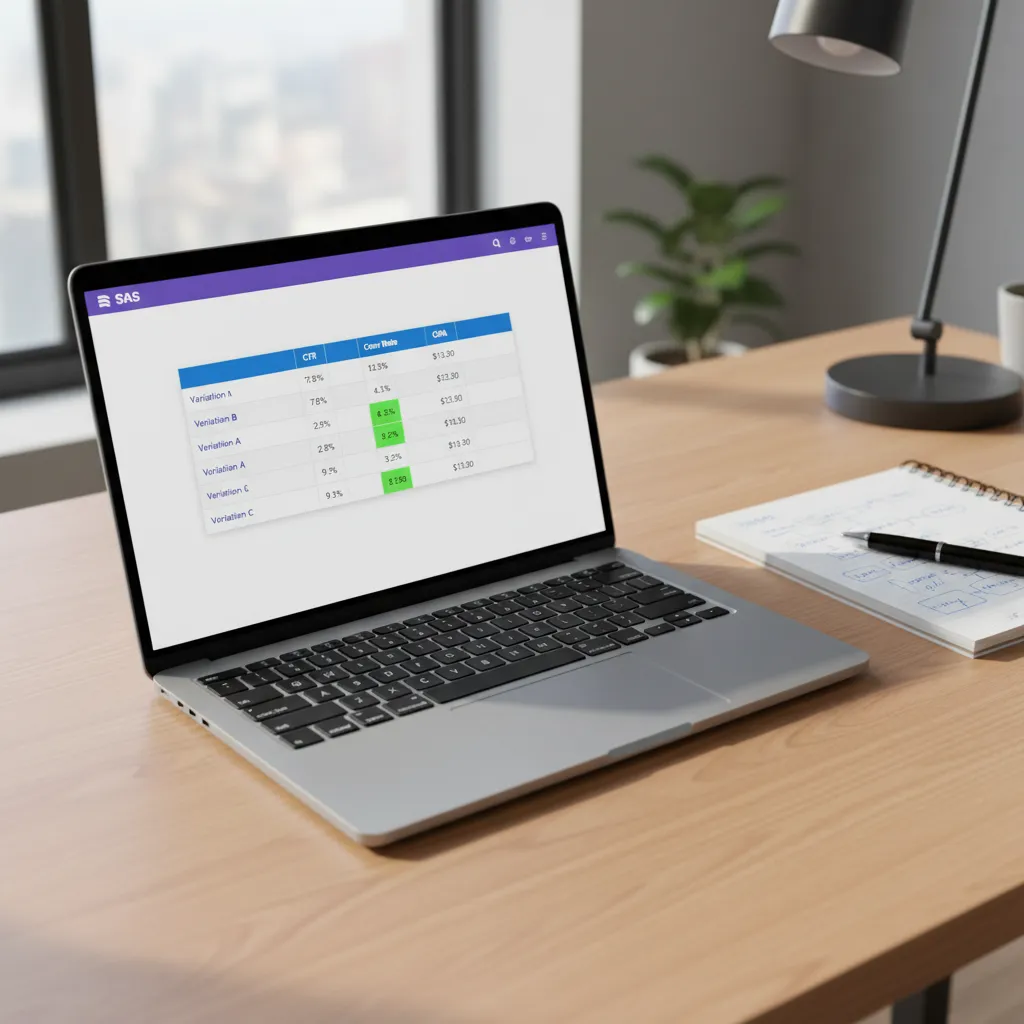
The 3x3 Method: Create 3 headline variations and 3 visual variations. Run them as 9 combinations for 7 days with equal budget split. Kill anything below 70% of the top performer's CTR after day 7. This gives you a winning combo without burning through budget.
For Google RSAs, use the "Ad Strength" indicator in Google Ads Editor — but don't treat it as gospel. I've seen "Poor" ad strength RSAs outperform "Excellent" ones when the copy matched the landing page perfectly. Ad Strength measures variety of assets, not quality of match.
For Meta, use their A/B test tool (not Campaign Budget Optimization) for clean results. CBO distributes budget unevenly, which makes it impossible to compare creatives fairly.
One thing I started doing recently: before I even launch a test, I put the ad creative screenshot next to the landing page screenshot and score the match. If the visual or text alignment is off, no amount of testing will fix a broken match. This is exactly why I built PageMatch to catch mismatches before you spend a dollar on the test.
What Mistakes Tank Your Ad Creative CTR?
After auditing more than a hundred ad-to-page combinations over the past year, these are the patterns that consistently kill CTR:
1. Promise in the ad, no proof on the page. I learned this the hard way with my own Shopify store. I ran an Instagram ad with "Free Shipping + 30% Off First Order" — got a solid 3.2% CTR. But conversion was 0.8%. Took me two weeks to figure out why. When I finally looked at the landing page through a customer's eyes, the shipping calculator showed $12.99 and the 30% discount wasn't mentioned anywhere. People clicked expecting free shipping and 30% off, landed on a page offering neither. When I added a matching banner and enabled free shipping, conversions jumped to 2.4% within a week.
2. CTA mismatch. Your ad says "Get a Free Quote." Your landing page button says "Learn More." That friction costs you 15-25% of conversions (Unbounce benchmark data, 2025). The CTA verb should be identical on both sides.
3. Too many messages in one creative. I've seen ads trying to communicate free shipping, a discount percentage, a product benefit, a trust badge, and a seasonal message — all in one image. The eye doesn't know where to land. One message per creative. Period.
4. Ignoring mobile aspect ratios. 73% of paid social traffic comes from mobile (Statista, 2025). If your creative is designed for desktop 16:9 and gets cropped to 4:5 or 9:16 on mobile, your headline might get cut off. Always design mobile-first, then adapt up.
5. Using your logo as the visual anchor. Nobody clicks an ad because of your logo (unless you're Nike). Lead with the benefit or the product. Your logo goes in the corner, small.
How Often Should You Refresh Ad Creatives?
Creative fatigue is real. On Meta, CTR starts declining after 7-14 days for audiences under 500K. On Google Display, you get more runway — 3-4 weeks before performance degrades. Search ads last longer because they're text-based and tied to intent.
A practical refresh schedule:
- Meta (all formats): New creative every 2 weeks. Rotate 3-4 variations so you always have a fresh one entering the mix.
- Google Display/Demand Gen: Monthly refresh. Seasonal updates for Q4 and major sale periods.
- Google Search RSAs: Quarterly review. Pin new headlines when keyword performance shifts.
- Performance Max: Let Google's ML rotate assets, but add 2-3 new images/videos monthly to give the algorithm fresh material.
Don't confuse refreshing with reinventing. A refresh can be as simple as changing the background color, swapping the CTA text, or updating the price. You don't need a new photoshoot every two weeks.
How Do You Measure Ad Creative Performance Beyond CTR?
CTR tells you if people click. It doesn't tell you if they convert. The metrics that matter together:
- CTR: are people interested enough to click?
- Conversion Rate: does the landing page deliver on the creative's promise?
- Quality Score (Google): does Google think your ad matches the keyword and landing page?
- Match Score: does your ad creative align with your landing page visually and textually?
That last metric is one most PPC managers don't track formally. They check it by gut feel — "yeah, the ad and page look about right." But gut feel misses things. Different fonts, conflicting color palettes, inconsistent pricing — these subtle mismatches erode trust and kill conversions even when CTR is strong.
When I was working with PPC teams and noticed this gap, I built PageMatch to turn that gut check into a number. You upload the creative, paste the landing page URL, enter your keywords, and get a Match Score from 0 to 100 with specific recommendations. Average small business scores 40-55. Agencies with tight processes score 70-85. Anything below 60 means ad spend is leaking.
What's the Real Takeaway?
Your ad creative doesn't exist in isolation. CTR is a function of the promise you make and the page you send people to. The best creative in the world won't convert if the landing page tells a different story.
Before you launch your next campaign, put your creative and your landing page side by side. Check the headline match, the visual consistency, the CTA alignment, and the offer specifics. If something feels off, fix it before you spend.
And if you want to quantify that "something feels off" into an actual score with specific fixes, run a free analysis at PageMatch's Landing Page Score tool. One report. Sixty seconds. No signup required.
Key takeaway: High-CTR ad creatives in 2026 aren't about clever copy tricks. They're about making a specific, honest promise in your ad and proving it instantly on your landing page. Match the message, match the visuals, match the CTA. Everything else is fine-tuning at the margins.
Founder & Product Manager
Product Manager with 6+ years of experience in FinTech, SaaS, and B2B/B2C digital products. Built PageMatch to solve the ad-to-page alignment problem that wastes billions in PPC ad spend.
Ready to improve your ad-to-page alignment?
PageMatch analyzes your ads and landing pages, then tells you exactly what to fix.
Try PageMatch Free